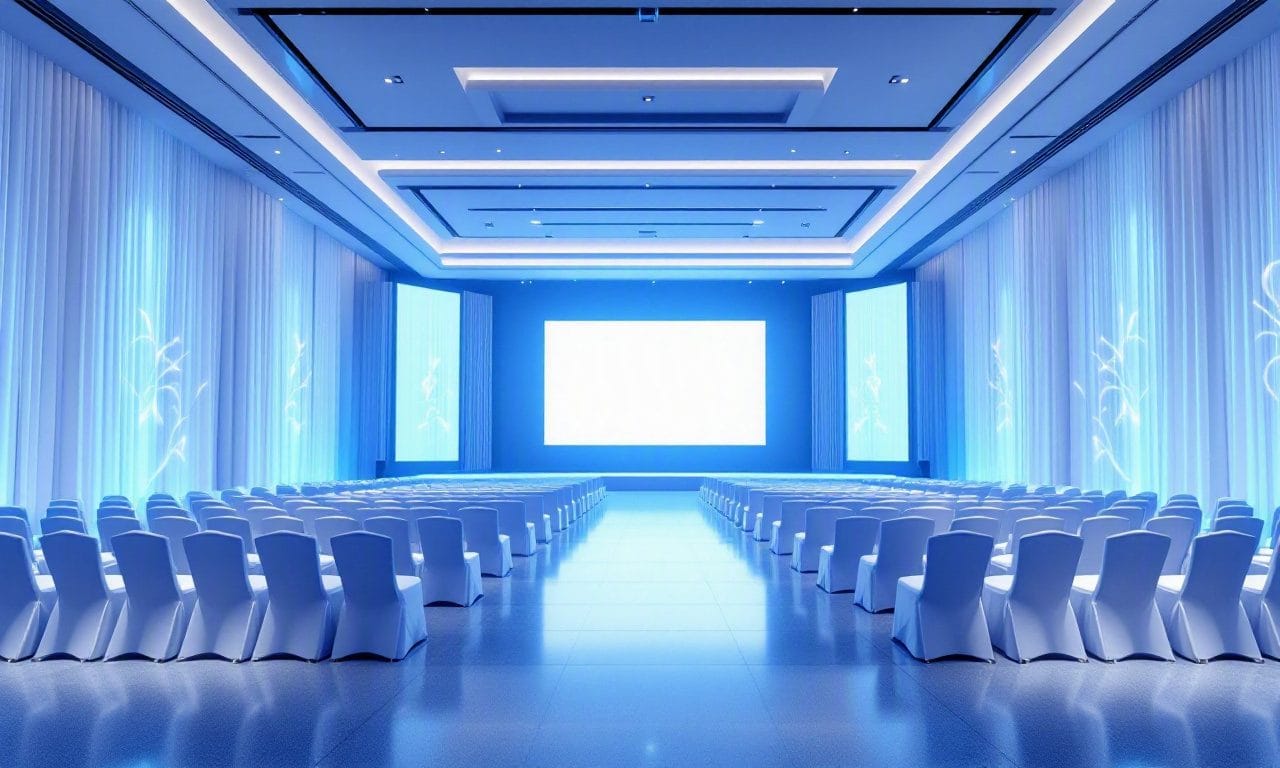
"Corporate event" is a broad umbrella, which is exactly why the term can feel vague. A product launch and a holiday party are both corporate events, yet they share almost nothing in look, scale, or purpose. Understanding the main types — and what each is designed to achieve — is the first step to planning one that actually works.
What makes an event "corporate"?
Three things, usually. First, it's organized by a company or organization rather than an individual. Second, it carries a professional objective — a launch to drive, a relationship to deepen, a message to land, funds to raise, a team to align. Third, it represents a brand, which means the experience is held to the standard that brand wants to project. A private party answers to a host's taste; a corporate event answers to stakeholders, an audience, and a goal. That accountability shapes everything from the design to the budget.
The main types of corporate events
Most corporate gatherings fall into a handful of recognizable formats. Here are the ones that matter most, and what each is for.
Conferences and summits
Multi-session, often multi-day programs that bring an industry, a company, or a community together to learn and connect. They combine general-session staging, breakout spaces, and networking, and they're as much about the experience between sessions as the content within them. See conference and summit production.
Brand activations and experiential events
Immersive, physical experiences designed to bring a brand or campaign to life — pop-ups, installations, and environments guests walk into and share. The goal is engagement and memory, not just attendance. See brand activations.
Galas and fundraisers
Black-tie evenings — corporate anniversaries, awards nights, or nonprofit fundraisers — where the room itself has to feel worth the ticket. For nonprofits, the design directly supports the ask. See gala and fundraiser design.
Product launches and press events
Events built around a single moment: the reveal. Everything — the set, the lighting, the florals — is designed for impact and for the photograph that travels afterward. See product launch event production.
Executive dinners and client receptions
Intimate, high-touch gatherings that deepen key relationships. Low in headcount, high in standard — bespoke tablescapes, considered florals, flawless service.
Holiday parties and team celebrations
Internal events that reward and energize a team — year-end celebrations, milestones, and culture-building gatherings, produced to the same standard a company brings to its client-facing work.
Seminars, workshops, and trade shows
Content-driven sessions focused on education, and large industry expos where a branded presence has to stand out in a crowded hall and turn foot traffic into conversations.
Internal vs. external corporate events
One useful way to sort corporate events is by audience. Internal events — team celebrations, trainings, town halls, holiday parties — are aimed at employees, and their job is culture, alignment, and morale. External events — launches, galas, activations, client dinners — face customers, donors, press, and partners, and their job is reputation, relationships, and revenue. Both deserve intentional design, but external events carry the brand in front of the people who judge it, which usually raises the stakes and the standard.
What is the purpose of a corporate event?
Behind every format sits an objective. Corporate events exist to launch products and ideas, build and deepen relationships with clients and partners, raise funds for a cause, educate an audience, celebrate and align a team, and shape perception of a brand. The best events are designed backward from that objective — every choice of venue, environment, and moment serving the goal rather than decoration for its own sake.
How corporate events are measured
Unlike a private celebration, a corporate event is usually accountable for a result. Depending on the format, success might look like press coverage and social content from a launch, funds raised at a gala, qualified leads from an activation, attendance and satisfaction at a conference, or simply relationships visibly strengthened over an executive dinner. Defining what success looks like up front is what separates an event that's merely nice from one that's genuinely effective.
What goes into producing a corporate event?
Whatever the type, a well-produced corporate event draws on the same disciplines: strategy and concept, design and florals, budget and vendor management, logistics and run-of-show, and the production — staging, lighting, sound — that carries it. At the full-service end, one studio owns all of it, so the look and the logistics arrive as a single, coherent experience. You can read more in what a corporate event planner does and what event production is.
How to choose the right format for your goal
Start with the objective, not the format. If you need to launch, the answer is a product or press event built around the reveal. If you need to raise money, it's a gala designed to move donors. If you need to engage a market, it's an activation people want to share. If you need to align a company, it's a conference or a team celebration. Naming the goal first turns a vague "we should do an event" into a clear brief — and a clear brief is what makes the event work.
Why companies invest in events
In an era when so much business happens on screens, a well-produced event is one of the few channels that still creates genuine presence — a room where people give a brand their full attention, form real impressions, and build relationships that emails and ads cannot. That is why companies keep investing in events even as marketing goes digital: the experience is the message, and a memorable one earns trust, loyalty, and word of mouth in ways a click never will. A corporate event is not a cost center; it is a relationship and reputation engine.
Trends shaping corporate events
A few shifts are changing how the best corporate events are designed. Experiential over passive — audiences expect to participate, not just sit and watch, so immersive environments and interactive moments are now central rather than novelties. Design as the differentiator — with so many events competing for attention, the visual and emotional experience, especially large-scale florals and environments, is what makes one memorable. Brand-true personalization — generic ballrooms are out; rooms that look unmistakably like the brand are in. Content built in — events are increasingly designed to generate photography and social content that extend their reach far beyond the guest list.
Common corporate event mistakes
A few avoidable errors undermine otherwise good events. Starting with the format instead of the objective — booking a gala before asking what the night should achieve. Underestimating production — a beautiful concept with no plan to build it on time. Spreading the budget too thin — trying to do everything adequately instead of a few things unforgettably. And treating design as decoration — when the environment is what guests actually feel and remember. The fix for all four is the same: define the goal, then design and produce backward from it with a single accountable team.
How far ahead should you plan?
It depends on scale, but earlier is almost always better. A large conference, gala, or activation benefits from months of lead time — enough to secure the right date and venue, design thoughtfully, and source without pressure. Smaller executive events can come together faster, but even then the most in-demand dates and venues go early. The single best thing you can do for a corporate event is start the conversation as soon as you have an objective and a rough date.
Who plans corporate events?
Depending on the company, corporate events are run by internal marketing or events teams, by executive and administrative staff, or by specialist outside studios brought in for flagship moments — and often by some combination. Smaller, routine gatherings are frequently handled in-house, while the events that carry the brand in front of clients, donors, or press tend to involve a dedicated design and production partner. Whoever owns it, the common thread among events that work is a single point of accountability and a clear objective driving every decision.
How Greystone produces corporate events
Greystone Design Co. designs and produces the full range — conferences, brand activations, galas, product launches, and executive celebrations — end to end, from concept and large-scale florals through production and on-site management. Based in Atlanta and producing nationally, with signature events beginning at $40,000. See our corporate event production page, or tell us what you're planning through the inquiry form.
Planning a corporate event?
Tell us your objective and vision — we'll help you choose the right format and design it to land.
Start Your InquiryCommon questions
- What is a corporate event?
- A corporate event is any organized gathering a business or organization holds for a professional purpose — to inform, celebrate, launch, raise funds, or build relationships. It ranges from small executive dinners to large conferences and public brand activations.
- What are the main types of corporate events?
- Conferences and summits, brand activations, galas and fundraisers, product launches and press events, executive dinners and client receptions, holiday and team celebrations, seminars and workshops, and trade shows.
- What is the difference between internal and external corporate events?
- Internal events (team celebrations, trainings, town halls) are aimed at employees and focus on culture and alignment. External events (launches, galas, activations) face clients, donors, and press and focus on reputation, relationships, and revenue.
- What is the purpose of a corporate event?
- To move a business objective forward — launching a product, deepening relationships, raising funds, educating an audience, aligning a team, or shaping how a brand is perceived.
- How do you measure a corporate event's success?
- By the objective: press and content from a launch, funds raised at a gala, leads from an activation, attendance and satisfaction at a conference, or relationships strengthened at a dinner. Defining success up front is key.
- What does Greystone produce?
- The full range — conferences, brand activations, galas, product launches, and executive celebrations — designed and produced end to end. Signature events begin at $40,000.
Let's design something unforgettable.
Share your event details and we'll start the conversation.
Start Your Inquiry