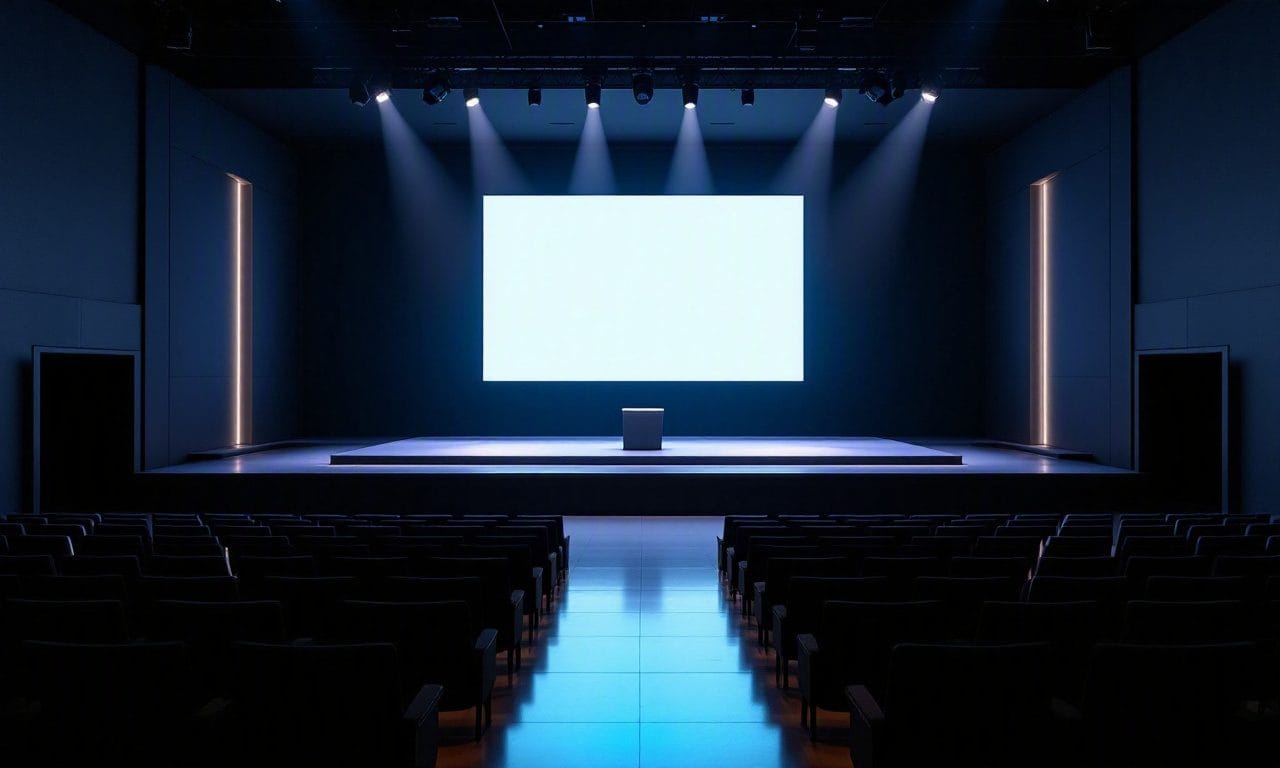
Production is the part of an event most guests never think about — and the part that most determines whether the night succeeds. A brilliant concept that loads in late, a keynote with dead microphones, or a floral installation that wasn't engineered for the ceiling can undo months of planning in minutes. Event production is the discipline that makes sure none of that happens.
Event production vs. planning vs. design
These three words describe different work that the best studios combine. Planning manages logistics, budget, vendors, and timelines — the project management of the event. Design creates the aesthetic, atmosphere, and emotional experience — the look and feel. Production physically builds and runs it: staging, lighting, sound, rigging, fabrication, load-in, and live show-calling. You can have a beautiful design and a tidy plan, but without production, nothing actually gets built or runs on cue. See what a corporate event planner does for how these roles fit together.
What event production includes
Production is a stack of specialized crafts working in concert:
- Staging and scenic — stages, sets, backdrops, and the structures a program is built on.
- Lighting — the design that shapes mood, focuses attention, and makes a room photograph beautifully.
- Audio — sound systems, microphones, and mixing so every word and note lands cleanly.
- Video and AV — screens, projection, cameras, and content playback for keynotes and reveals.
- Rigging — the engineering that safely hangs lighting, video, and large installations.
- Florals and environmental fabrication — the large-scale installations and built elements that define a space.
- Power and infrastructure — distribution, generators, and the unglamorous systems everything else depends on.
- Load-in, run-of-show, and strike — the schedule and crew that build it, run it, and take it down.
The event production process
Pre-production
The planning of the build: technical drawings, equipment lists, crew scheduling, vendor coordination, and a run-of-show that maps every cue. The more rigorous the pre-production, the smoother the event.
Load-in and build
Crews transform an empty venue into the event — staging, rigging, lighting, florals, and AV, usually against a tight, venue-imposed clock.
Showtime
The event runs to the run-of-show, with a production lead calling cues and a crew managing transitions so the program feels seamless to the audience.
Strike
After the last guest leaves, everything comes down quickly and cleanly — often overnight — and the venue is returned to its original state.
Why production is where events succeed or fail
Design earns the attention, but production earns the trust. Corporate audiences notice when a mic cuts out, a screen freezes, or a reveal mistimes — and they remember it. Production is what delivers certainty: the assurance that the experience will look and run exactly as promised, in front of an audience that matters, with no second take. It's the difference between a concept that's beautiful on paper and an event that's flawless in the room.
Production for different event types
Every format leans on production differently. A conference needs general-session staging and multi-day AV; a product launch concentrates everything on the reveal moment; a gala pairs stage and program with large-scale floral installations; and a brand activation is often production-heavy by nature, because the built environment is the experience.
In-house production vs. separate vendors
You can hire a designer, a lighting company, an AV vendor, and a florist separately — and sometimes that's the right call. But when one studio owns design and production together, the florals, lighting, and staging are conceived as one experience and built to a single timeline, rather than four crews meeting for the first time at load-in. That integration is what makes ambitious scale feel effortless instead of chaotic. It's the core of how Greystone produces corporate events.
Key roles on a production team
Behind a seamless event is a team of specialists, each owning a craft. A production manager or lead runs the whole operation and calls the show. A technical director oversees staging, rigging, and the technical build. Lighting, audio, and video each have their own designers and operators. A floral and scenic team builds the environment. And a crew of skilled hands handles load-in, transitions, and strike. On a full-service engagement, one studio coordinates all of them to a single vision, so the disciplines reinforce each other instead of competing.
Production terms you'll hear
A quick glossary helps when you're reading a production proposal. Load-in and strike are the setup and teardown. Run-of-show is the minute-by-minute schedule of cues. Rigging is the engineering that hangs equipment and installations safely. Scenic refers to built sets and backdrops. AV covers audio-visual systems — sound, screens, and projection. And FOH (front of house) is where the show is mixed and run. You don't need to be fluent, but recognizing the vocabulary makes it easier to know what a quote actually covers.
How much does event production cost?
Production cost scales with the ambition of the build — the size of the staging, the complexity of the lighting and AV, the scale of the floral installations, and the labor to load it all in and out on schedule. It is one of the larger pieces of a full-service event budget precisely because it is where the experience is physically delivered. For how this fits into the overall investment, see our guides to corporate event cost and the cost to hire a planner.
Questions to ask a production team
- Do you design and build in-house, or subcontract the technical work?
- How do you handle load-in and strike within the venue's window?
- Who is the single point of contact on site during the event?
- How is rigging and safety engineered and certified?
- Can you show production at a similar scale and complexity?
Common production pitfalls
Most production problems trace back to thin pre-production. Underestimating the load-in window, skipping technical drawings, ignoring power and rigging requirements, or leaving florals and AV to coordinate themselves at the last minute are how beautiful concepts become stressful nights. The antidote is rigor up front and a team that has built at your scale before — which is exactly what owning design and production under one roof is meant to provide.
Production and design are inseparable
It's tempting to think of design as the creative part and production as the technical part, but on the best events the line disappears. A floral installation is a design idea and a rigging problem; a reveal is a creative moment and a lighting-and-cue sequence; a branded environment is an aesthetic and a build. When the same studio holds both, those decisions are made together from the start, so the design is always buildable and the build always serves the design. Separating them is where ambitious ideas quietly get value-engineered into something smaller.
What great production feels like to a guest
The paradox of production is that when it's done well, no one notices it at all. Guests don't see the rigging or the run-of-show; they feel a room that looks effortless, a program that flows without a hitch, and moments that land exactly when they should. That invisibility is the goal. Great production doesn't call attention to itself — it removes every friction between the audience and the experience, so all that's left is the impression the brand wanted to make.
Hybrid and on-camera production
Many corporate events now reach an audience beyond the room — streamed live, recorded for later, or filmed for content. That adds a layer to production: camera positions and sightlines, lighting that reads on screen as well as in person, audio captured cleanly for broadcast, and a run-of-show that serves both the live and remote audiences at once. Designing for the camera from the start — rather than bolting it on — is what keeps a hybrid event from feeling like two compromised experiences instead of one strong one. It's also where integrated design and production pays off, because the set, the lighting, and the shot are planned together.
Safety, permits, and logistics
The least visible part of production is also among the most important: the permits, certificates of insurance, fire and rigging safety, power-load calculations, and venue rules that govern what can actually be built and how. A professional production team handles this as a matter of course, because a stunning installation that isn't safely engineered or properly permitted is a liability, not an achievement. When you hire production, part of what you're buying is the assurance that ambition and safety are never in conflict.
How Greystone approaches production
Greystone designs and produces corporate experiences end to end — leading the creative and the build in one studio, with our signature large-scale florals integrated into the production rather than bolted on afterward. Based in Atlanta and producing nationally, with signature events from $40,000. See our corporate event production page, or start a conversation through the inquiry form.
Producing a corporate event?
Tell us your vision and venue — we'll show you how we'd design and produce it end to end.
Start Your InquiryCommon questions
- What is event production?
- Event production is the technical and logistical execution that brings an event to life — staging, lighting, sound, video, rigging, fabrication, load-in, and run-of-show management. It is the craft and coordination that turn a concept into a real event.
- What is the difference between event production and event planning?
- Planning manages logistics, budget, vendors, and timelines; production physically builds and runs the event — staging, lighting, sound, and live show-calling. Design, a third role, creates the look and feel. Full-service studios do all three.
- What does event production include?
- Staging and scenic, lighting, audio, video and AV, rigging, florals and fabrication, power and infrastructure, and the load-in, run-of-show, and strike that build, run, and remove it.
- Why is production so important?
- Because it delivers certainty. Audiences notice when a mic cuts out or a reveal mistimes. Production makes sure the experience looks and runs exactly as promised, with no second take.
- Should I hire one studio or separate production vendors?
- Separate vendors can work, but one studio owning design and production together means the florals, lighting, and staging are built as a single experience to one timeline — which makes ambitious scale far smoother.
- Does Greystone handle production?
- Yes — Greystone designs and produces corporate events end to end, leading the creative and the build in one studio, with large-scale florals integrated into the production. Signature events begin at $40,000.
Let's design something unforgettable.
Share your event details and we'll start the conversation.
Start Your Inquiry