A supplement isn't a drug, but if you take prescription medication, a five-minute conversation with your provider or pharmacist before starting is simply good sense. Here's why, and what to ask.
Often, yes — but it depends on your medications and health, so review it with your provider or pharmacist first. The most important conversations involve medications that affect blood sugar (like those for diabetes) or blood pressure, because supporting satiety, digestion, and metabolic signaling could, in principle, layer onto what those medicines are already doing. A natural GLP-1 supplement is a dietary product, not a prescription drug, and this page is educational — not medical advice or a substitute for your provider's guidance.
It's tempting to assume that because something is a dietary supplement, it can't interact with anything. That's not a safe assumption. Supplements contain bioactive ingredients — that's the whole point — and bioactive means they can, in principle, influence the same systems your medications target.
With a natural GLP-1 supplement, the systems in question are appetite/satiety, digestion, and metabolic signaling. If you take a medication that also acts on those systems, it's worth understanding how they might layer together. This isn't cause for alarm; it's cause for a quick, informed check with the professional who knows your full picture.
The simplest rule: if you take any prescription medication, tell your provider or pharmacist about every supplement you're considering — including a natural GLP-1 product — before you start. Bring the actual label.
These are the categories where a provider conversation is especially sensible before adding a metabolic-support supplement. This is not exhaustive, and only your provider can assess your specific situation:
If you're managing a condition like PCOS or diabetes, our guides on GLP-1 and PCOS and metabolic health provide helpful context for that conversation.
You don't need to be a pharmacologist to do this well. A productive check-in looks like:
Pharmacists are an underused, highly accessible resource for exactly this kind of question.
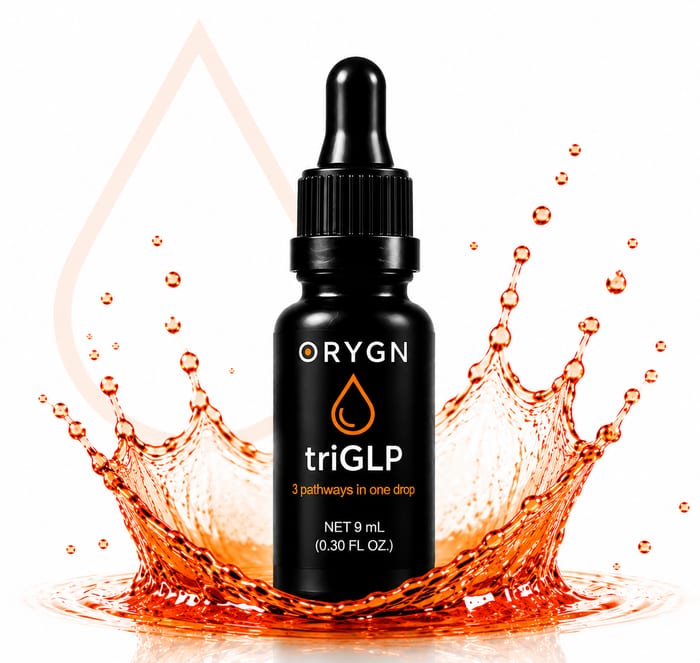
triGLP is a dietary supplement made from salmon-derived ProGo® peptides, taken as drops. It is not a drug and is not intended to replace any medication. We deliberately make no claims that it treats, manages, or substitutes for treatment of any condition. If you take prescription medication, please review triGLP with your provider or pharmacist before starting — and never adjust a prescribed medication on your own based on a supplement. See the triGLP product page →
This page is general education, not medical advice. It is not intended for use during pregnancy or breastfeeding. Your provider's guidance always takes precedence.
Possibly, but review it with your provider or pharmacist first. Because a natural GLP-1 supplement supports satiety, digestion, and metabolic signaling, it's sensible to coordinate it with any medication that affects blood sugar. triGLP is a dietary supplement, not a substitute for medication, and you should never adjust prescribed medication on your own.
It's one of the categories worth discussing with your provider before starting, since metabolic and routine changes can be relevant to blood-pressure management. There's no need for alarm — just a quick, informed check with the professional who knows your full medication list.
No. triGLP is a dietary supplement, not a pharmaceutical, and it doesn't carry the strong pharmacological effects of prescription GLP-1 drugs. Even so, bioactive supplements can in principle influence systems your medications target, so reviewing it with your provider or pharmacist if you take prescriptions is the responsible step.
Your prescribing provider or a pharmacist. Pharmacists in particular are highly accessible and specifically trained on interactions. Bring the supplement label and a complete list of everything you take — prescriptions, OTC products, and other supplements.
No. Never stop or change a prescribed medication on your own to take a supplement. A natural GLP-1 supplement is not a replacement for medication or medical care. Any change to prescribed treatment is a decision to make with the provider managing your care.
triGLP makes no drug claims and never replaces your medication — it's a studied, transparent dietary supplement. Loop in your provider, then decide with confidence.
Shop triGLP →