A woman's metabolism shifts with her hormones — across the monthly cycle, through PCOS, in perimenopause and beyond. Here's how GLP-1 fits into that picture, and how to support it naturally at every stage.
GLP-1 (glucagon-like peptide-1) is a satiety and blood-sugar hormone the gut releases after meals. In women, its signaling interacts closely with estrogen, progesterone, and insulin, which is why appetite, cravings, and where the body stores fat can shift across the menstrual cycle, with PCOS, and through perimenopause and menopause. Supporting GLP-1 through fiber, protein, gut health, movement, sleep, and studied bioactive-peptide supplements is a natural, food-first way to work with a woman's changing physiology rather than against it.
Most general advice about appetite, weight, and metabolism was studied in — and written for — men. But a woman's body runs on a different hormonal rhythm, and that rhythm has a real influence on how hunger, cravings, energy, and fat storage behave from week to week and decade to decade.
Two hormones do much of the work behind the scenes: estrogen and progesterone. Estrogen, in particular, has a wide-reaching relationship with metabolism. Research associates healthy estrogen signaling with better insulin sensitivity, more stable appetite, and a tendency to store fat in the hips and thighs rather than around the organs. As estrogen fluctuates — monthly, and then more dramatically in midlife — that metabolic backdrop changes with it.
GLP-1 sits right in the middle of this picture. It's an incretin hormone released by L-cells in the intestine after eating, and its job is to tell the brain you're satisfied, slow stomach emptying, and help the pancreas match insulin to blood sugar. Because estrogen and GLP-1 both touch appetite and insulin, their signals overlap — which is why so many women notice that hunger and cravings track with their cycle and their stage of life.
The takeaway: if appetite or weight feels harder to manage at certain times of the month, after a PCOS diagnosis, or in your 40s and 50s, that's not a willpower problem. It's physiology — and physiology responds to the right inputs. Understanding the GLP-1 connection is the first step. Explore the foundation in our natural GLP-1 guide.
Appetite is not constant for most women, and there is a biological reason. Here's how GLP-1 and the sex hormones tend to interact through the major stages — described in general terms, not as medical advice.
In the first half of the cycle (the follicular phase), rising estrogen is generally associated with steadier appetite and stronger satiety signaling. After ovulation, as progesterone rises and estrogen dips (the luteal phase), many women notice increased hunger, stronger cravings — especially for carbohydrates — and a bit more water retention. This shift is well-documented and partly reflects how the hormonal environment modulates satiety signals like GLP-1. Knowing it's coming makes it easier to plan meals around protein and fiber rather than fight it.
Pregnancy and the postpartum period bring large, rapid hormonal and metabolic changes, and nutritional needs are highly individual. This is a stage to work directly with your OB-GYN or midwife. Dietary supplements, including triGLP, are not intended for use during pregnancy or breastfeeding unless a qualified healthcare provider advises otherwise.
This is the stage where many women feel the metabolic shift most sharply. As estrogen declines, insulin sensitivity often decreases, satiety signaling can weaken, and the body tends to store more fat around the midsection (visceral fat) rather than the hips and thighs. The result many women describe — "I'm doing everything I used to, and it's not working anymore" — is a real, hormone-driven change, not a failure of discipline. We cover this stage in depth below.
Rising estrogen is generally linked with stronger satiety and fewer cravings — a good window to build protein- and fiber-forward habits.
After ovulation, the estrogen dip and progesterone rise often bring carb cravings. Front-loading protein and fiber helps satiety signaling keep up.
Falling estrogen in perimenopause is associated with reduced insulin sensitivity and more midsection fat storage — a physiological change, not a willpower one.
Polycystic ovary syndrome (PCOS) is one of the most common hormonal conditions in women of reproductive age, and at its core it is frequently a metabolic story as much as a reproductive one. Many women with PCOS have some degree of insulin resistance, where cells respond less efficiently to insulin and the body compensates by producing more of it. Elevated insulin can, in turn, influence appetite, energy, and how readily the body stores fat.
This is where the incretin system becomes relevant. GLP-1 helps the pancreas release insulin in proportion to blood sugar and supports steadier post-meal glucose — exactly the kind of signaling that tends to be under strain when insulin resistance is present. Research into GLP-1 pathways and metabolic health is active and ongoing, which is why this hormone comes up so often in conversations about insulin sensitivity.
It's important to be precise here: a dietary supplement does not treat, cure, or manage PCOS or insulin resistance. Those are medical matters for a qualified provider. What food-first, GLP-1-supportive habits can do is create a metabolic environment that works with your body — more fiber and protein, better gut health, regular movement, and consistent sleep — alongside whatever care plan your clinician recommends.
Want the deeper science on insulin sensitivity and the metabolic pathways involved?
GLP-1, insulin & PCOS →If cravings and "food noise" are part of your PCOS experience, you're not imagining the link — appetite signaling and insulin are deeply connected. Our guide to food noise explains why the mental pull toward food can intensify when satiety signaling is blunted, and what helps quiet it.
If there is one stage where women most often start searching for answers, it's perimenopause and menopause. The complaints are remarkably consistent: weight that settles around the middle, appetite that feels less predictable, energy that dips, and the frustrating sense that the strategies of the past no longer deliver.
The biology behind this is real. As estrogen declines:
That last point is crucial and often missed. Protecting lean muscle is one of the most powerful levers a woman has in midlife — both for metabolism and for strength, balance, and healthy aging. Crash diets that drop weight quickly often sacrifice muscle along with fat, which can make the metabolic slowdown worse. A smarter approach prioritizes protein, resistance training, and satiety support. See our full guide to losing fat while keeping muscle →
Supporting GLP-1 signaling is part of this picture because it speaks to two of the biggest midlife challenges at once: appetite control and blood-sugar steadiness. Food-first habits come first; a studied supplement can layer on top of them.
Go deeper: why menopause weight gain happens and how to support your metabolism, and our practical guide to metabolism for women over 40.
The foundation of natural GLP-1 support is the same for everyone, but a few priorities matter especially for women navigating hormonal change:
For women who want to layer targeted support on top of these habits, a studied natural appetite-support approach built around a researched ingredient is one option to explore — always alongside, never instead of, the food-first foundation.
triGLP is a dietary supplement made with ProGo® bioactive peptides from sustainably sourced Norwegian Atlantic salmon. It's designed to support the body's own metabolic pathways — GLP-1, GLP-2, and GIP — rather than to introduce a synthetic drug compound.
For women specifically, two design features stand out. First, it supports appetite and satiety signaling (GLP-1) and insulin response (GIP) together — the two levers that shift most with hormonal change. Second, ProGo® peptides have been studied for their role in supporting lean-muscle preservation through myostatin signaling, which speaks directly to the muscle-loss challenge of midlife.
It's taken as drops under the tongue, once or twice daily — no injections, no prescription — making it an easy thing to layer onto a protein-, fiber-, and strength-focused routine. See the full triGLP product page →
ProGo® holds FDA New Dietary Ingredient (NDI) status and carries 13 structure/function claims the FDA has not objected to, backed by over a decade of research into the ingredient.
triGLP is a general dietary supplement, not a women's-health treatment. It is not intended for use during pregnancy or breastfeeding. If you take hormonal medication, manage a condition like PCOS or thyroid disease, or have any health concern, talk with your healthcare provider before starting any supplement.
The GLP-1 hormone itself works the same way, but its signaling interacts closely with estrogen and progesterone — so women often experience appetite, cravings, and fat storage differently across the menstrual cycle and especially through perimenopause and menopause. Falling estrogen in midlife is associated with reduced insulin sensitivity and weaker satiety signaling, which is why many women notice metabolism feels harder to manage with age. Supporting GLP-1 naturally through protein, fiber, gut health, strength training, and sleep works with that physiology.
No supplement can treat menopause or guarantee weight loss, and any product claiming otherwise should be treated with caution. What you can do is support the metabolic systems most affected in menopause — appetite/satiety signaling and blood-sugar steadiness — through a food-first routine (protein, fiber, strength training, sleep), and optionally layer a studied supplement like triGLP on top. triGLP supports GLP-1, GLP-2, and GIP pathways and is studied for lean-muscle support, which matters because protecting muscle helps offset the midlife metabolic slowdown. Talk with your provider, especially if you take hormone therapy.
Many women with PCOS have some degree of insulin resistance, where the body produces extra insulin to manage blood sugar. GLP-1 helps the pancreas release insulin in proportion to blood sugar, so the incretin system is part of the broader metabolic conversation in PCOS. Importantly, a dietary supplement does not treat or manage PCOS — that is a medical matter for your provider. Food-first, GLP-1-supportive habits (fiber, protein, gut health, movement) can complement your care plan, not replace it.
After ovulation, in the luteal phase, estrogen dips and progesterone rises — a shift associated with increased hunger and stronger cravings, often for carbohydrates. This is normal physiology, not a lack of willpower. Front-loading protein and fiber, staying hydrated, and planning satisfying meals during the second half of your cycle can help your satiety signaling, including GLP-1, keep pace.
triGLP is a dietary supplement made from salmon-derived bioactive peptides, taken as drops by mouth. It is formulated for general adult use. However, it is not intended for use during pregnancy or breastfeeding, and women who take hormonal medications or manage a condition such as PCOS or thyroid disease should consult their healthcare provider before starting it. As with any supplement, talk to your provider if you have questions about your individual situation. There is a salmon/fish source, so it is not suitable for those with a fish allergy.
If we had to pick one: protect and build lean muscle through strength training and adequate protein. Muscle is metabolically active tissue, and preserving it directly counters the slowdown that comes with declining estrogen and age-related muscle loss. Pair that with fiber-rich foods, good gut health, and consistent sleep to support GLP-1 satiety signaling. A studied supplement can layer on top, but the muscle-and-protein foundation does the heavy lifting. Read our lose-fat-keep-muscle guide →
No. triGLP does not contain hormones, estrogen, or phytoestrogens. It is made from ProGo® bioactive peptides derived from salmon, which are studied for their interaction with metabolic receptor pathways (GLP-1, GLP-2, GIP) — not for any hormonal activity. It supports your body's own signaling rather than adding hormones to your system.
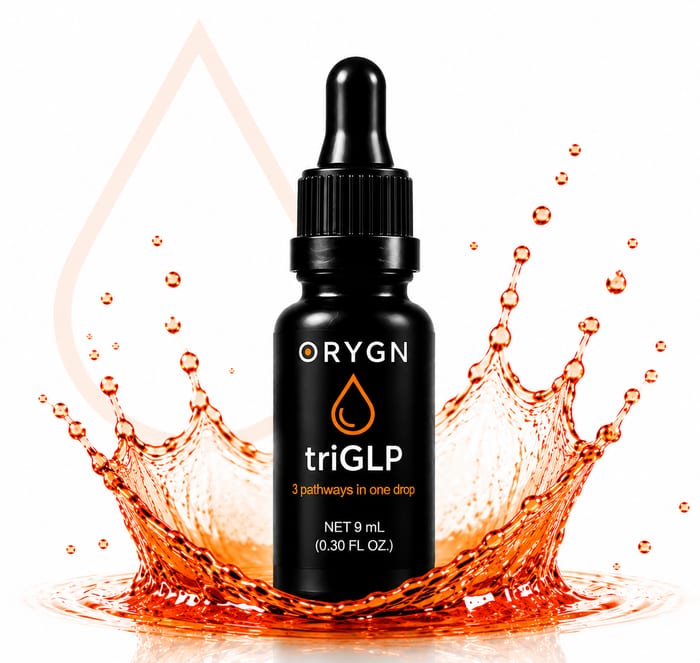
triGLP brings three metabolic pathways together in one daily drop — appetite, gut, and insulin response — built on a decade of peer-reviewed science and studied for lean-muscle support.
Shop triGLP →