Women 40+ · Muscle · Metabolism

Metabolism for Women Over 40 — A Practical Guide

Your metabolism doesn't collapse at 40 — it changes. Understand what's shifting (and what isn't), then focus on the few levers that actually move the needle in this decade and beyond.

Quick answer

Does metabolism really slow down for women after 40?

Sort of — but not the way most people think. Research suggests your cells' baseline calorie burn stays relatively stable through midlife and doesn't drop sharply until much later. What changes for women in their 40s is mostly hormonal (declining estrogen affecting insulin sensitivity and fat storage) and muscular (age-related muscle loss lowers daily burn). The fix isn't crash dieting — it's protecting muscle with protein and strength training, steadying blood sugar with fiber, and supporting GLP-1 satiety signaling.

Section 1

What's really changing (and what isn't)

The phrase "my metabolism died at 40" is common — and mostly a myth in its literal form. Large studies of energy expenditure suggest that your resting metabolism per pound of tissue stays fairly steady from your 20s into your 60s. So what gives?

Two things are genuinely shifting for women in their 40s:

  • Hormones. Perimenopause brings fluctuating and then declining estrogen, which is associated with reduced insulin sensitivity, more midsection fat storage, and weaker satiety signaling.
  • Muscle. Without deliberate strength training, adults lose muscle steadily with age. Since muscle is your most metabolically active tissue, losing it quietly lowers your daily calorie burn.

The encouraging part: both of these are responsive. You have real leverage. For the full hormonal picture, see our pillar on GLP-1 for women.

Section 2

Lever 1 — build and protect muscle

If you do one new thing in your 40s, make it resistance training. Lifting weights (or bodyweight, bands, machines) two to three times a week preserves and builds the muscle that keeps your metabolism elevated, improves insulin sensitivity, and protects bone density as estrogen falls.

Pair it with enough protein — many women under-eat it. Protein supports muscle, has a higher thermic effect than carbs or fat, and triggers satiety signaling. A protein-forward plate at each meal is a simple, powerful anchor. More on this in our lose fat, keep muscle guide.

Section 3

Lever 2 — steady your blood sugar and satiety signals

As insulin sensitivity dips, blood-sugar swings become more disruptive — driving cravings, energy crashes, and fat storage. Supporting steadier glucose and stronger satiety signaling pays off:

  • Fiber at every meal slows glucose absorption and feeds the gut bacteria that support GLP-1.
  • Protein + fiber before carbs flattens the post-meal spike.
  • Walk after meals — even 10 minutes helps muscles soak up glucose.
  • Protect sleep — short sleep disrupts hunger hormones and insulin within days.

GLP-1 is the satiety hormone at the center of this — when it's signaling well, smaller portions feel more satisfying. Learn how to support it naturally →

Section 4 · Myth-Busting

Four metabolism myths to drop in your 40s

A lot of midlife metabolism advice is recycled and wrong. Clearing out the myths makes room for what actually works.

Myth 1: "My metabolism crashed at 40."

Research on energy expenditure suggests resting metabolism per pound of tissue stays relatively stable from your 20s into your 60s. What changes is hormones and muscle mass — both addressable — not a sudden metabolic collapse.

Myth 2: "I just need to eat less."

Deeper calorie cuts often accelerate muscle loss, which lowers your burn further and creates a frustrating spiral. Eating enough protein while training usually beats eating less of everything.

Myth 3: "Cardio is the answer."

Cardio is great for your heart, but it doesn't build the muscle that protects your metabolism. Strength training is the higher-leverage choice in this decade; cardio is a complement, not a substitute.

Myth 4: "A supplement will fix it."

No supplement overrides the fundamentals of protein, training, fiber, and sleep. A studied supplement can support satiety and metabolic signaling, but it works with good habits, never instead of them.
Section 5

Where triGLP fits for women 40+

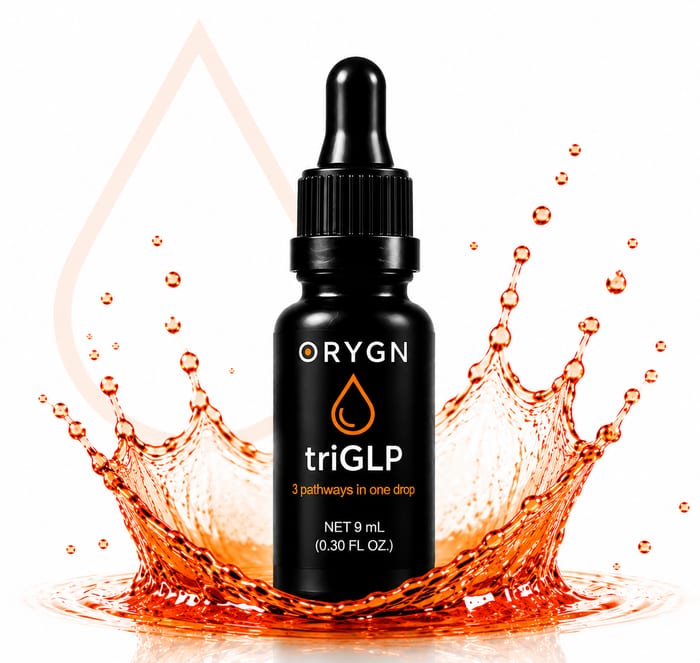
On top of a muscle-and-fiber foundation, some women choose to layer a studied supplement. triGLP uses ProGo® bioactive peptides to support GLP-1, GLP-2, and GIP pathways — appetite, gut, and insulin response — and is studied for lean-muscle support via myostatin signaling, which is exactly the concern of this decade. Taken as drops, NDI status, no injection. See triGLP →

A general dietary supplement, not a treatment for any age-related or hormonal condition; not intended for pregnancy or breastfeeding. Consult your provider if you take medication or use hormone therapy.

Good questions

Frequently asked questions

Is it harder to lose weight after 40 as a woman?

It can feel harder, but mostly because of hormonal shifts (declining estrogen affecting insulin sensitivity and fat distribution) and gradual muscle loss — not a collapse of your base metabolism. Adjusting strategy toward protein, strength training, fiber, and sleep tends to be far more effective than simply eating less and doing more cardio.

What is the best way to boost metabolism over 40?

Build and protect muscle through resistance training and adequate protein. Muscle is your most metabolically active tissue, so preserving it is the most durable way to support daily calorie burn. Layer on fiber for blood-sugar steadiness, GLP-1 support for satiety, and consistent sleep.

How much protein do women over 40 need?

Many women in this group under-eat protein. A practical starting point is a generous protein source at each meal, distributed across the day to support muscle maintenance. Exact needs depend on your size, activity, and goals, so a dietitian or provider can personalize the target.

Can triGLP help women over 40?

triGLP is a general dietary supplement that supports GLP-1, GLP-2, and GIP pathways and is studied for lean-muscle support — relevant interests for this decade. It is not a treatment for menopause or any condition and won't replace the muscle-and-protein foundation. Consider it an optional layer on top of solid habits, and check with your provider if you take medication or hormone therapy.

Does estrogen affect metabolism?

Yes. Estrogen has a broad relationship with metabolism — healthy estrogen signaling is associated with better insulin sensitivity and a tendency to store fat in the hips and thighs rather than the abdomen. As estrogen declines in perimenopause, insulin sensitivity often falls and fat storage shifts toward the midsection, which is why metabolism feels different in your 40s and 50s.

Make this decade your strongest

Support appetite, gut, and insulin response — plus the lean muscle that defines metabolism over 40 — with triGLP, one daily drop built on a decade of science.

Shop triGLP →