The weight that settles around your middle in midlife isn't a willpower problem — it's a hormone-driven metabolic shift. Here's what's actually changing, and the food-first levers that help most.
Menopause weight gain is driven mostly by declining estrogen, which is associated with lower insulin sensitivity, weaker satiety signaling, and a shift in fat storage from the hips and thighs toward the abdomen. Age-related muscle loss lowers the metabolic baseline at the same time. The most effective response isn't eating less and less — it's protecting muscle with protein and strength training, steadying blood sugar with fiber, supporting GLP-1 satiety signaling, and prioritizing sleep. A studied supplement can layer on top of those habits.
The frustration is almost universal: the eating and exercise habits that worked for years suddenly stop delivering, and weight starts collecting around the middle. This is real, and it's physiological. As estrogen declines through perimenopause and into menopause, several things shift at once:
None of this is a failure of discipline. It's a change in the operating system — and it responds to different inputs than it did at 30. For the full hormonal picture across every life stage, see our pillar guide to GLP-1 for women.
If there's one lever that matters most in midlife, it's lean muscle. Muscle is metabolically active tissue — it burns energy around the clock and improves how your body handles blood sugar. Yet the typical response to menopause weight gain (eat less, do more cardio) often strips muscle away along with fat, which makes the metabolic slowdown worse over time.
A smarter approach flips the priority:
We cover this trade-off in depth in our guide to losing fat while keeping muscle.
The drop in insulin sensitivity means blood-sugar swings hit harder — and those swings drive cravings and energy crashes. Two habits help most:
Struggling with constant cravings and mental "food chatter"? It has a name — and a mechanism.
Understand food noise →Supporting GLP-1 is central here because it governs the "I'm satisfied" signal that often weakens in menopause. You can support it through food and lifestyle, and — if you choose — layer on a studied supplement built for it.
Two factors quietly undermine many women's midlife metabolism efforts, and neither involves diet or the gym: sleep and chronic stress.
Menopause frequently disrupts sleep — hot flashes, night waking, and shifting hormones all contribute. But short or fragmented sleep has fast metabolic consequences: within days it can lower insulin sensitivity, raise the hunger hormone ghrelin, blunt satiety signals including GLP-1, and intensify cravings for quick-energy carbohydrates. If your food and training are dialed in but sleep is poor, sleep may be the real bottleneck.
Chronic stress compounds this through cortisol. Persistently elevated cortisol is associated with increased appetite, stronger cravings, and a tendency to store visceral (abdominal) fat — exactly the pattern most menopausal women are trying to counter — and it further degrades sleep, creating a self-reinforcing loop.
This isn't about perfection. Small, steady gains in sleep and stress often unlock the progress that diet changes alone couldn't.
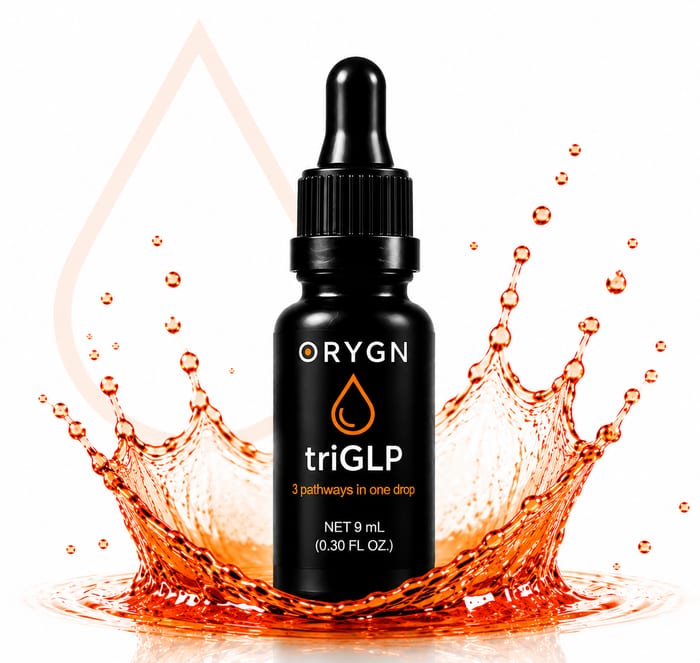
triGLP is a dietary supplement made with ProGo® bioactive peptides from Norwegian Atlantic salmon. For menopause specifically, two design features are relevant: it supports appetite/satiety (GLP-1) and insulin response (GIP) together — the two systems most affected by falling estrogen — and ProGo® peptides have been studied for lean-muscle support via myostatin signaling, which speaks to the midlife muscle-loss problem.
It's taken as drops under the tongue, once or twice daily — no injection, no prescription. ProGo® holds FDA New Dietary Ingredient (NDI) status and carries 13 structure/function claims the FDA has not objected to. See the triGLP product page →
triGLP is a general dietary supplement, not a menopause treatment, and is not intended for use during pregnancy or breastfeeding. If you use hormone therapy (HRT) or manage any condition, talk with your healthcare provider before starting a supplement.
No. The hormonal shift that makes it easier to gain weight is normal, but the outcome is not fixed. Prioritizing protein and resistance training to protect muscle, eating fiber to steady blood sugar, supporting GLP-1 satiety signaling, and protecting sleep all meaningfully change the trajectory. The strategies simply have to evolve from what worked in your 30s.
As estrogen declines, fat storage shifts from the hips and thighs (a more estrogen-driven pattern) toward the abdomen, including visceral fat around the organs. This is hormone-driven and common in perimenopause and menopause. Supporting insulin sensitivity through fiber, muscle, and movement is the most constructive response.
No supplement treats menopause or guarantees weight loss, and any product claiming so should be treated skeptically. What you can do is support the systems most affected — satiety signaling and blood-sugar steadiness — with a food-first routine and optionally a studied supplement like triGLP, which supports GLP-1, GLP-2, and GIP pathways and is studied for lean-muscle support. Talk to your provider, especially if you take HRT.
Resistance/strength training is the highest-value choice because it preserves and builds the muscle that keeps metabolism up and improves insulin sensitivity. Pair it with daily movement and some cardio for heart health, but don't rely on cardio alone — it doesn't protect muscle the way lifting does.
Many women under-eat protein. A practical anchor is a palm-sized (or larger) protein source at each meal, spread through the day to support muscle protein synthesis. Your exact needs depend on body size and activity, so a registered dietitian or your provider can personalize it.
triGLP brings appetite, gut, and insulin-response support together in one daily drop — and is studied for the lean-muscle support that matters most in midlife.
Shop triGLP →