If your metabolism doesn't feel like it did at 25 — more around the middle, less in the tank — you're in good company, and it's not just 'getting older and giving up.' Here's what's shifting, and what genuinely helps.
GLP-1 is a gut hormone that helps signal fullness, steady blood sugar, and coordinate the body's response to meals — and it's central to the metabolic picture for men as much as women. With age, many men gain visceral (deep belly) fat, lose muscle, and notice steadier hunger get harder to come by. The most effective response is protecting muscle (protein + strength training), steadying blood sugar, supporting satiety signaling, and prioritizing sleep — with a studied supplement as an optional layer. This is general wellness information, not medical advice.
A lot of men quietly accept the midlife slide — the gut that won't budge, the energy that dips, the sense that the old approach stopped working — as inevitable. Some change with age is real, but "inevitable decline" is the wrong frame, and it costs men years of feeling worse than they need to.
What's actually happening is mostly muscle and metabolism. Without deliberate strength training, men lose muscle steadily with age, and since muscle drives a big share of daily calorie burn and blood-sugar handling, that loss quietly lowers the metabolic baseline. Layer on busy-life habits — skipped sleep, stress, convenience food — and the result feels like a broken metabolism when it's really an unsupported one. The encouraging part: it's highly responsive to the right inputs.
Men tend to store excess fat around the abdomen — and not just the pinchable kind. Visceral fat sits deep around the organs, and it's more metabolically active and more associated with metabolic health concerns than fat elsewhere. That's why the midsection isn't only a cosmetic frustration; it's a metabolic signal worth taking seriously.
The good news is that visceral fat is also quite responsive to the fundamentals — it often moves with improvements in diet, activity, and sleep. Supporting steady blood sugar and satiety is part of that picture; see blood sugar & insulin and our practical guide on how men can lose belly fat.
For men, the single highest-leverage habit is protecting and building muscle:
Build the engine, and the rest — energy, midsection, blood sugar — gets easier.
The other big lever is blood-sugar steadiness. Spike-and-crash eating drives the afternoon energy dips and the snack cravings that sabotage progress. Protein and fiber with meals, whole over refined carbs, and a post-meal walk smooth the curve — supporting both steadier energy and easier appetite control. GLP-1 satiety signaling sits at the center of that, helping meals feel like enough.
triGLP is a dietary supplement made with studied ProGo® peptides that support GLP-1 satiety signaling and GIP/insulin-response pathways — the appetite and blood-sugar systems behind the midsection-and-energy story. ProGo® has also been studied for lean-muscle support via myostatin signaling, which speaks directly to the muscle-first priority. Taken as drops, NDI status, no injection. See triGLP →
triGLP supports satiety and metabolic signaling and is studied for lean-muscle support; it does not raise testosterone or other hormones, and it does not treat, cure, or prevent obesity or any condition. Individual results vary. It supports a healthy diet and training, never replaces them. See your provider for any medical concern. Not intended for use during pregnancy or by anyone for whom a fish/salmon source is unsuitable.
With age, men tend to lose muscle (which lowers daily calorie burn and blood-sugar handling) and store more fat around the abdomen, including deep visceral fat. Busy-life factors — less training, skipped sleep, stress, convenience food — accelerate it. It's not simply inevitable: visceral fat is quite responsive to strength training, protein, steadier blood sugar, and sleep.
Lead with muscle: strength train regularly and eat enough protein to protect and build it, since muscle drives metabolism and blood-sugar handling. Add steady blood sugar (protein and fiber, fewer refined-carb crashes), daily movement, good sleep, and stress management. Avoid crash diets, which strip muscle and backfire. Visceral (deep belly) fat tends to respond well to these fundamentals.
No. triGLP makes no hormonal claims and does not raise testosterone or any other hormone. It's a dietary supplement that supports GLP-1 satiety signaling and GIP/insulin-response pathways and is studied for lean-muscle support — metabolic-wellness support, not a hormone product. Any concerns about hormones should be discussed with your healthcare provider.
Very relevant for men. GLP-1 is a gut hormone involved in fullness, blood-sugar steadiness, and the body's response to meals in everyone. Men navigating midlife midsection fat, energy dips, and harder-to-control appetite are dealing with the same satiety and metabolic systems GLP-1 supports — alongside the muscle-first habits that matter most.
Protect and build muscle through strength training and adequate protein — it's the biggest lever against the midlife metabolic slide. Pair it with steady blood sugar, good sleep, daily movement, and stress management. A studied supplement can layer on top, but the muscle-and-protein foundation does the heavy lifting.
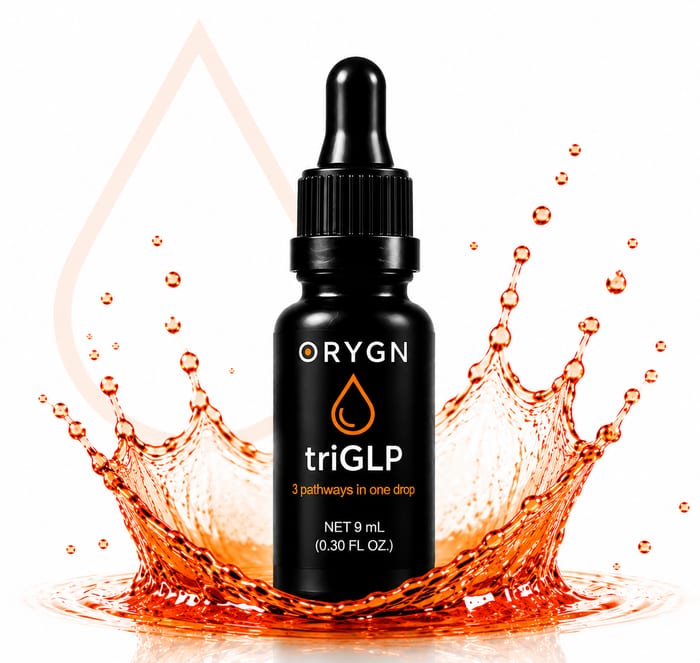
The midlife slide isn't a life sentence — it's an unsupported metabolism, and that you can change. Build the muscle, steady the blood sugar, and let triGLP support the satiety and lean-muscle signaling underneath. You've got more in the tank than you think.
Shop triGLP →