Most people tolerate natural GLP-1 supplements well, but it's smart to know what's typical, what's not, and how to start in a way that minimizes any discomfort.
With food-derived peptide and fiber-based natural GLP-1 supplements, reported side effects are usually mild and digestive — temporary fullness, slight nausea, or changes in bowel habits — and often ease as your body adjusts in the first week or two. The main hard stop is the ingredient source: a salmon-derived product is not suitable for anyone with a fish allergy. Anything more than mild, or anything that worries you, means stop and check with your provider. These products are not prescription drugs and don't carry the stronger pharmacological effects of GLP-1 medications.
Because "natural GLP-1 supplement" covers different formulas, always read your specific product's information. For food-derived peptide and fiber-based products like triGLP, the side effects people most commonly mention are mild and tend to involve digestion:
These tend to be temporary because the product is working with your body's own gut signaling rather than overriding it with a strong drug effect. Understanding the underlying biology can help — see our natural GLP-1 guide.
The most important non-negotiable is the ingredient source. triGLP is made from salmon-derived ProGo® peptides, so it is not suitable for anyone with a fish or salmon allergy. This isn't a "mild side effect" matter — an allergic reaction can be serious. Always check the source of any supplement against your known allergies, and when in doubt, ask your provider.
The same principle applies to any supplement: read the full ingredient list, including the source of the active ingredient and any excipients, so nothing catches you off guard.
A measured start makes mild side effects less likely and easier to interpret:
Remember the fundamentals do the heavy lifting; the supplement is a support layer, not a shortcut. See the full safety guide →
Mild, fading digestive effects are one thing. These are different — if you experience any of the following, stop and contact a healthcare professional:
Trust your judgment. A supplement is never worth pushing through symptoms that concern you, and your provider would rather hear from you early.
Most people tolerate triGLP well. When side effects occur with food-derived peptide supplements, they're typically mild and digestive (temporary fullness, slight nausea, changes in bowel habits) and often ease within the first week or two. Because triGLP is salmon-derived, it is not suitable for those with a fish allergy. Stop and consult your provider for anything beyond mild.
When mild digestive effects occur, they commonly settle within the first one to two weeks as your body adjusts. If they persist, worsen, or feel more than mild, that's a reason to stop and check with your provider rather than wait it out.
Some people report mild, transient nausea when starting a natural GLP-1 or fiber-based supplement, which usually fades with consistent use. Taking it with the recommended routine, staying hydrated, and not exceeding the label serving can help. Persistent or significant nausea is a reason to stop and consult your provider.
The most important is an allergic reaction to the ingredient source — for a salmon-derived product, anyone with a fish allergy should avoid it, and signs like rash, swelling, or trouble breathing need urgent care. Otherwise, anything more than mild, persistent, or unexpected — especially alongside prescription medication — warrants stopping and contacting your provider.
It might be a consideration, which is why you should review any new supplement with your provider or pharmacist if you take prescription medication — particularly for diabetes, blood sugar, or blood pressure. See our dedicated guide on GLP-1 supplements and medication interactions for details.
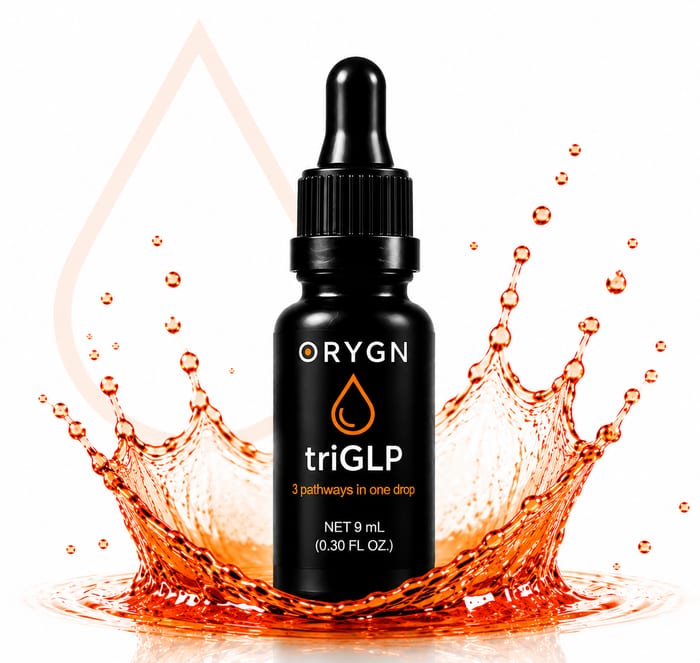
triGLP is taken as a few drops a day, built on a third-party-tested, NDI-status ingredient. Start with the label, pair it with the fundamentals, and listen to your body.
Shop triGLP →