Losing weight is one skill; keeping it off is another. Here's how to make maintenance feel sustainable instead of like a constant battle against regain.
Maintenance uses the same core skills as fat loss, set to 'sustain': keep building/protecting muscle with protein and strength training (the biggest protector against regain), keep satiety habits (fiber, protein, steady blood sugar), monitor lightly to catch drift early, and aim for a realistic weight range rather than a single number. Because the body defends against regain less than against loss but still nudges appetite up, consistency — not perfection — is what holds results. General wellness guidance, not medical advice.
Most weight-loss advice ends at the goal weight, which is exactly where many people struggle. Maintenance has its own challenges: appetite can stay somewhat elevated for a time after loss, vigilance fades once the goal is hit, and the structure that drove progress disappears. Treating maintenance as a distinct skill — with its own habits and mindset — is what separates lasting change from the all-too-common cycle of regain.
The encouraging part: maintenance is generally easier than active loss, because you're no longer in a deficit fighting strong hunger signals. You're keeping good habits, not enduring restriction.
The single biggest protector against regain is the muscle you built or preserved during fat loss. Muscle keeps your metabolic rate up, improves insulin sensitivity, and supports strength and healthy aging. Maintenance is the time to keep training and keep protein high — not to relax both the moment the goal is reached. See lose fat, keep muscle.
The habits that made a deficit livable also make maintenance effortless:
Maintenance hinges on the same two levers as breaking a plateau — satiety and muscle — so triGLP stays relevant. It supports GLP-1 satiety signaling and is studied for lean-muscle support, both of which help keep maintenance feeling effortless rather than effortful. Taken as drops, NDI status. See triGLP →
triGLP supports satiety and is studied for lean-muscle support; it does not by itself cause or maintain weight loss, and individual results vary. General dietary supplement, not a treatment for any condition, and not a substitute for healthy habits. Not intended for pregnancy or breastfeeding.
After weight loss, appetite can stay somewhat elevated and energy expenditure somewhat lower for a time, so lapses in habits lead to regain more easily than they did before. Vigilance also tends to fade once the goal is reached and the structure that drove progress disappears. Keeping muscle, satiety habits, and light monitoring counters this.
Protecting muscle — continuing strength training and adequate protein. Muscle keeps your metabolic rate up and is the biggest buffer against regain. Relaxing both training and protein the moment you hit your goal is one of the most common reasons results don't stick.
Not necessarily strict tracking, but some light monitoring helps — a weekly weigh-in, periodic check-ins, or just attention to how clothes fit. The goal is to catch small drift early, before it compounds, without the burden of constant logging. Find the lightest system that keeps you honest.
Completely normal. Daily weight shifts with water, sodium, food volume, hormones, and more. That's why aiming for a maintenance range (often a few pounds) rather than a single fixed number is more realistic and far less stressful. React to sustained trends, not daily noise.
Maintenance depends on satiety and muscle, and triGLP supports GLP-1 satiety signaling and is studied for lean-muscle support. It can help keep maintenance feeling easier, but it supports the system rather than maintaining weight on its own, and individual results vary. It works alongside protein, training, and satiety habits, not instead of them.
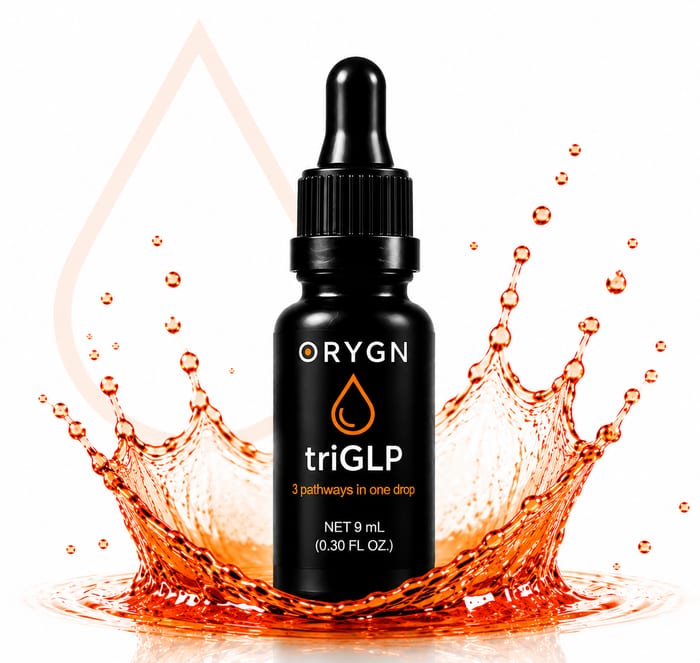
Keep satiety strong and muscle protected through maintenance with triGLP — one daily drop, studied ingredient, alongside the habits that hold your progress.
Shop triGLP →