Non-Prescription · GLP-1 Support · Honest

Natural Alternatives to Prescription GLP-1 — An Honest Look

More people are asking whether there's a natural, non-prescription way to support GLP-1. The honest answer requires being clear about what these approaches are — and, just as importantly, what they are not.

Quick answer

Is there a natural alternative to prescription GLP-1 medications?

There are natural, non-prescription approaches that aim to support the body's own GLP-1 signaling — through diet, lifestyle, and dietary supplements built on studied ingredients. But it's essential to be clear: these are a different category from prescription GLP-1 medications, with different mechanisms, magnitudes, regulation, and oversight. A natural approach is not a substitute for a prescribed medication and is not medically equivalent. It's an option for people who want a food-first, non-prescription path. Never start, stop, or change a prescription based on a supplement — those decisions belong with your healthcare provider.

Section 1

What people mean by a 'natural alternative'

When people search for a "natural alternative to prescription GLP-1," they're usually looking for one of two things: a way to support their body's own GLP-1 signaling through food and lifestyle, or a dietary supplement built around an ingredient studied to interact with GLP-1 pathways. Both are legitimate areas of interest — and both belong to the world of nutrition and dietary supplements, not pharmaceuticals.

The word "alternative" is where care is needed. It does not mean "a product that does the same thing as a prescription medication." It means a different kind of approach — non-prescription, food-based — for people who, for their own reasons, want to start there. Holding that distinction honestly is the foundation of everything on this page. For the underlying biology, see our natural GLP-1 guide.

Section 2

The distinction that matters most

This is the single most important thing to understand, so we'll state it plainly. Prescription GLP-1 medications and natural GLP-1 support are two separate categories:

  • Prescription GLP-1 medications are synthetic pharmaceutical compounds that bind GLP-1 receptors with high affinity to produce a strong, sustained effect. They go through the FDA drug-approval process, carry specific clinical indications and side-effect profiles, and are prescribed and monitored by licensed providers.
  • Natural GLP-1 support means diet, lifestyle, and dietary supplements that aim to support the body's own GLP-1 production and signaling. These are regulated as foods/supplements, not drugs, and make structure/function support claims — not disease or drug claims.

The mechanisms and magnitudes are not comparable, and this page makes no claim that a natural approach matches, replaces, or rivals a prescription medication. A supplement is not a substitute for prescribed treatment. We explore the comparison in depth — fairly to both — in natural GLP-1 vs. prescription.

Never make this decision alone. If you are considering, taking, or thinking about stopping a prescription medication, that is a conversation for your healthcare provider — full stop. Do not start or stop any prescription based on information on a website or the appeal of a supplement.

Section 3

Why some people explore a non-prescription approach

People come to natural GLP-1 support for a range of personal reasons, and it's worth naming them neutrally — without disparaging medications, which are valuable tools used under medical care:

  • A preference for a food-first, non-pharmaceutical approach to wellness.
  • Wanting to support healthy metabolic habits generally, without a clinical indication for medication.
  • Interest in a no-injection, non-prescription option they can pair with diet and lifestyle.
  • Working alongside their provider's guidance on overall metabolic wellness.

None of these reasons require positioning a supplement as a drug replacement — and we don't. A natural approach stands on its own terms: supporting your body's existing systems through nutrition, lifestyle, and studied ingredients. Our guide to non-prescription GLP-1 support goes further.

Section 4

What a natural, food-first approach actually involves

A genuine natural GLP-1 approach is mostly about daily habits that support your body's own incretin signaling — the same foundation we cover across this site:

  • Fiber and protein at meals to support satiety signaling and steadier blood sugar.
  • Gut health, since the microbiome interacts with the cells that produce GLP-1.
  • Movement and strength training to support metabolic health and insulin sensitivity.
  • Sleep and stress management, which influence the whole hunger-hormone system.

A studied supplement can layer on top of that foundation — but the foundation does the real work. See blood sugar & insulin sensitivity and food noise for the supporting pieces.

Section 5

What to look for in a natural GLP-1 supplement

If you choose to add a supplement, the quality bar matters more than the marketing. Look for:

  • A named, independently studied ingredient — not an anonymous proprietary blend.
  • FDA New Dietary Ingredient (NDI) status or other meaningful regulatory review.
  • GMP certification and third-party testing.
  • Honest, structure/function language ("supports," "helps maintain") — and a hard pass on anything promising drug-like results or claiming to replace medication.

Our safety & side effects guide walks through how to vet quality and who should check with a provider first.

Section 6

Where triGLP fits

triGLP is a dietary supplement made with ProGo® bioactive peptides from salmon, studied in laboratory work for their interaction with GLP-1 and GIP receptor pathways. It supports the body's own incretin signaling and is taken as drops — a non-prescription, no-injection option for people pursuing a natural, food-first approach. It holds FDA NDI status and is third-party tested. See the triGLP product page →

Important: triGLP is a dietary supplement, not a drug. It is not a substitute for, equivalent to, or a replacement for any prescription medication, and it is not intended to diagnose, treat, cure, or prevent any disease. Never start, stop, or change a prescribed medication based on a supplement; those decisions are between you and your healthcare provider. Not intended for use during pregnancy or breastfeeding.

Good questions

Frequently asked questions

Is there a natural alternative to prescription GLP-1 medication?

There are natural, non-prescription approaches that aim to support your body's own GLP-1 signaling through diet, lifestyle, and dietary supplements built on studied ingredients. They are a different category from prescription GLP-1 medications — different mechanisms, magnitudes, regulation, and oversight — and are not a substitute for, or medically equivalent to, a prescribed medication. They're an option for people who want a food-first, non-prescription path. Decisions about medication belong with your provider.

Can a supplement replace my prescription GLP-1 medication?

No. A dietary supplement is not a substitute for a prescribed medication and is not medically equivalent. You should never start, stop, or change a prescription based on a supplement or anything you read online. If you have questions about your medication, those belong with the licensed provider who prescribed it.

Are natural GLP-1 options as effective as prescription drugs?

They are different categories and shouldn't be framed as a head-to-head on effectiveness. Prescription GLP-1 medications are powerful pharmaceuticals used under medical supervision; natural GLP-1 support is a nutrition-and-supplement approach that works with your body's own signaling. We make no claim that a natural approach matches or rivals a medication — they serve different roles.

Why would someone choose a natural approach?

Common, personal reasons include a preference for a food-first, non-pharmaceutical approach, an interest in supporting general metabolic wellness without a clinical indication for medication, wanting a no-injection non-prescription option, or working alongside a provider's broader guidance. None of these require treating a supplement as a drug replacement.

What should I look for in a natural GLP-1 supplement?

A named, independently studied ingredient (not a vague proprietary blend), FDA New Dietary Ingredient (NDI) status, GMP certification and third-party testing, and honest structure/function language. Treat any product promising drug-like results or claiming to replace medication as a red flag.
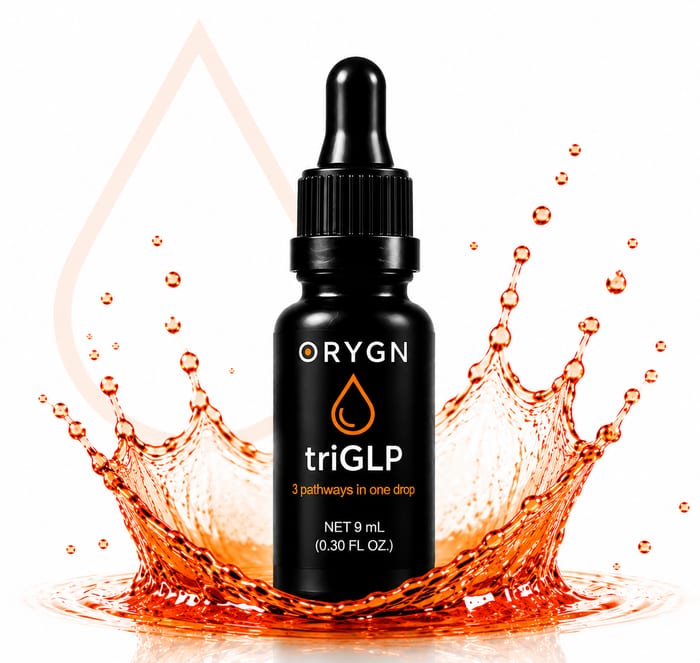
An honest, non-prescription option

triGLP is a studied, transparent dietary supplement — never a substitute for medication. If a natural, food-first approach is what you're after, it's built to support it honestly.

Shop triGLP →